Beschrijving
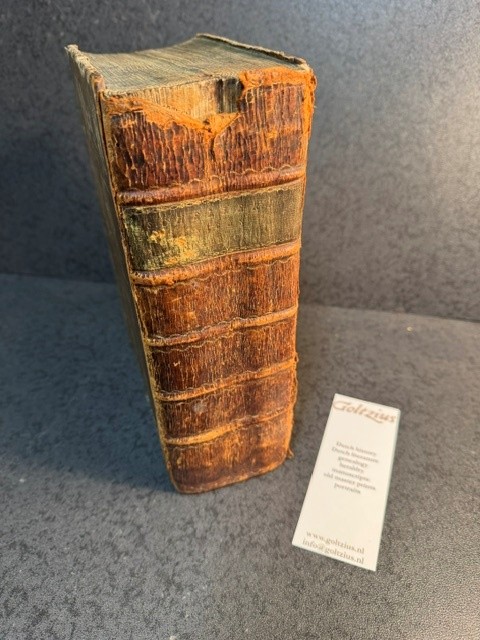
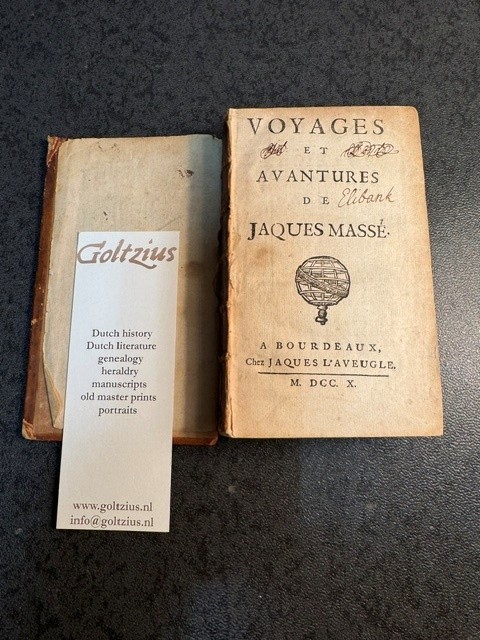
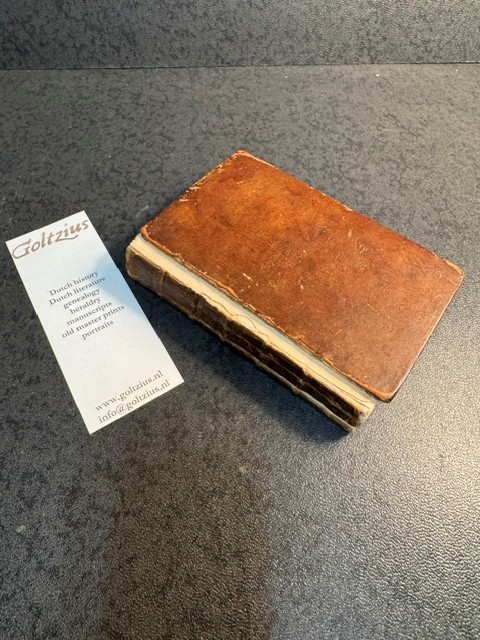
Bourdeaux, Jaques l'Aveugle, 1710, 508pp. severely damaged hardcover leather binding (front loose from binding, free endpaper loose, writing in ink on titlepage, back missing, bookblock split in three loose parts, spine damaged as a result thereof, exlibris/bookplate of Edward Seeber on endpaper. A much storied travelogue, now known to be entirely imaginary, written by Simon Tyssot de Patot. This is the earliest known edition (edition ‘A’), with the note on page 77 and the smaller type on page 508, both as described in other booksellers listings. Despite the date on the title page, the book was almost certainly not published in 1710. It is thought to have been published in the 1720's and back-dated for various reasons (whether to avoid controversy or pre-date similar works, is not known).Tyssot de Patot's seminal utopian novel, wich ‘surpassed practically every other work of philosophical fiction of the age for notoriety’ (Israel). After a shipwreck the protagonist finds himself marooned on a remote shore and, after many hardships, discovers a utopian country, where he is hospitably received. At some point Jacques judges the time right to explain the basic tenets of Christianity, which are, however, met with derision and deemed ludicrous and irrational. During his return to Europe Jacques meets a young Gascon, ‘qui était bien le plus hardi Athée ou Déiste, que j'aye vû de mes yeux’, as Jacques notes. The Gascon rejects all formal religion and holds that the bible is just a book like any other, much like Adriaan Koerbagh had argued in his Bloemhof in 1668. The novel closes with a fable of the bees, narrated by the Gascon, ridiculing Christianity. Like other utopian novels ‘Jacques Massé seeks to persuade readers of the irrationality of European religion, politics, morality, and society by describing in detail an exotic and remote atheistic society, where peace and and harmony reign, and virtue is better cultivated than among Europeans’ (Israel). It comes as no surprise that the novel was banned upon publication, both in the Dutch Republic as in France. Rosenberg p. 85 (edition B(i)), pp. 93-94; Israel, Radical Enlightenment, pp. 595-597 and Rosenberg ‘A’ Gove, 217-219; Cioranescu 62587; Barbier IV, 1103; Atkinson, 'The Extraordinary Voyage in French Literature', p. 70; Rosenberg, pp. 84-5. Price of this rare book adjusted according to the damage to the binding.